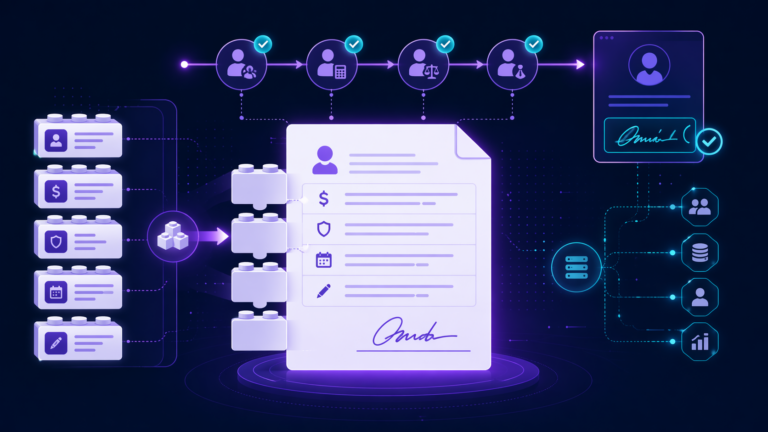
“If your ATS feels like it’s slowing hiring down, it probably is.”
That realization hits a lot of talent leaders at the same moment: you are not behind because your team is lazy or “needs to hustle.” You are behind because the system is quietly fighting you.
An ATS is supposed to be the backbone of hiring operations. It should hold the process steady, keep data clean, and reduce manual effort. But in fast-changing, high-growth environments, that same ATS can turn into a bottleneck. Not overnight. Gradually. One workaround at a time.
Let’s break down why it happens, what it looks like when it’s happening, and how to turn it around.
Executive Summary
In high-change hiring environments, an ATS often shifts from operational backbone to operational bottleneck when multiple distinct hiring motions are forced into one shared workflow. High-volume hourly hiring and corporate recruiting are fundamentally different machines. When they share stages, rules, forms, and approvals, everything gets blurry.
Here’s what tends to happen next:
- Teams start patching problems with quick fixes that turn into permanent workarounds
- Operational debt piles up in the form of clunky steps, messy fields, and unreliable reporting
- Recruiters build shadow processes outside the ATS to stay productive
- Candidate experience degrades through friction, confusion, and slow communication
- Leadership loses trust in the system and asks for manual reporting instead
The good news is this is fixable without ripping the whole system out.
By separating hiring motions inside the platform, governing data standards, designing workflows for real-world edge cases, and establishing clear system ownership, your ATS can become a backbone again.
And when it does, you get speed, clean data, and happier humans.
Backbone vs. Bottleneck
A backbone ATS is boring in the best way.
It stays out of the way, supports the work, and makes hiring easier. Workflows reflect reality. Dashboards match what’s happening. People trust the system.
A bottleneck ATS is loud.
It forces irrelevant steps. It creates delays. It makes hiring managers avoid it. It makes candidates drop out. It turns the system into the place where momentum dies.
The tricky part is the shift is slow. It happens through “small improvements” and “temporary fixes” that never get cleaned up.
Early warning signs
If your ATS is becoming a bottleneck, you will see things like:
- Recruiters tracking candidates in spreadsheets “just to stay sane”
- Exceptions becoming normal (“we had to do that hire outside the system”)
- Leaders questioning reports every meeting
- The ATS showing up in conversations more than hiring strategy does
In a healthy setup, your ATS should not be the main character.
The Most Common Cause: Forcing Different Hiring Models Into One Workflow
Many organizations run multiple hiring motions at once:
- High-volume hourly hiring (speed, simplicity, throughput)
- Corporate or specialized hiring (depth, scrutiny, multi-step decisions)
On paper, “one ATS for everything” sounds efficient. In practice, the workflows collide.
High-volume hiring needs
High-volume hiring is about momentum.
Candidates apply fast, often on their phone, often to multiple employers. Managers need to fill dozens of openings quickly. The process is usually simple and short.
When this motion gets dragged through corporate-style steps, you lose people.
Corporate hiring needs
Corporate hiring is about precision.
Multiple interviews. More stakeholders. More compliance nuance. More documentation. More decision-making time. This motion needs structure and auditability.
When corporate hiring is forced into a simplified high-volume workflow, it loses control and clarity.
What happens when they share a workflow
Both sides start bending the system to survive:
- High-volume teams skip steps or speed-run stages
- Corporate teams add fields and approvals “for compliance”
- Stage definitions stop meaning the same thing across teams
- Reporting becomes meaningless because “Interview” means five different things
Then the real damage begins: trust collapses.
Reporting Chaos: When the ATS Stops Telling the Truth
Reporting usually breaks before leadership notices the operational pain.
Because once teams use fields and stages differently, your metrics stop being comparable or even accurate.
Funnel metrics become untrustworthy
In a clean system, “Interview Completed” has one definition.
In a messy system, one team uses it for actual interviews and another uses it as a parking lot for screened candidates.
Now your funnel conversion rates are fake. You cannot diagnose bottlenecks because your reporting is the bottleneck.
Picklists turn into a landfill
Without governance, fields multiply. Options sprawl. People choose whatever is closest. Some type into notes instead. Others leave it blank.
Then you run “Applicants by Source” and get:
- 15 versions of the same source
- a giant “Other” bucket
- missing data everywhere
Leadership loses confidence fast
Once leaders stop trusting ATS data, they will demand manual reporting. They will ask for spreadsheets. They will assign someone else to clean up “real numbers.”
This is how the ATS turns from backbone into a time sink.
Candidate Experience: The Silent Casualty
Your teams feel the pain first, but candidates pay for it too.
Candidates experience the friction, not the reason behind it.
What they see
- Applications that feel too long for the role
- Redundant questions and confusing templates
- Irrelevant interview instructions
- Slow or inconsistent updates
- Radio silence caused by broken workflows and missed triggers
High-volume candidates move fast. If your process makes them wait, they disappear.
Corporate candidates also disengage when the process feels disorganized or overly slow. And top candidates will interpret that as a signal about your company.
Candidate drop-off is rarely a mystery. It is usually friction.
The Workaround Trap: “For Now” Becomes “Forever”
When the ATS cannot support reality, teams do what they have to do.
Workarounds keep hiring moving:
- spreadsheets for tracking
- email approvals outside the system
- manual reporting adjustments
- “special req types” for weird cases
- backfilling data later
Short-term, it works.
Long-term, it becomes operational debt.
Operational debt is the accumulated weight of shortcuts, manual work, and temporary fixes that quietly became permanent. And the interest is paid in time, errors, compliance risk, and burnout.
The more workarounds exist, the more fragile your operation becomes. It starts relying on tribal knowledge and heroics.
And when those heroes leave, the whole thing wobbles.
Quick Checklist: Signs Your ATS Is Becoming a Bottleneck
If several of these are true, you are not imagining it:
- Fuzzy metrics: reports differ depending on who pulls them
- Shadow processes: spreadsheets, side trackers, manual scheduling everywhere
- Candidate drop-off: more starts than completions, more ghosting mid-process
- Rising complaints: frequent “can we bypass this step?” questions
- Special case syndrome: every new scenario needs a one-off workaround
- Constant cleanup: reports require manual fixing before anyone trusts them
- Leadership skepticism: execs request parallel tracking outside the ATS
- Recruiter admin overload: recruiting feels like data entry and system wrestling
- Confusing communication: candidates ask “did you even get my application?”
- Post-hire headaches: downstream systems suffer because ATS records are incomplete
If you see these, the fix is not “train recruiters harder.” The fix is structural.
Turning the Bottleneck Back Into a Backbone: The Fix Framework
This is usually not a rip-and-replace problem. It is a reset-the-foundation problem.
Here are the four pillars that consistently work.
1) Separate hiring motions inside the platform
Stop forcing fundamentally different hiring models through the same path.
Create distinct workflows, templates, and stage definitions for high-volume vs corporate hiring. Use different application forms and communication flows by job family. Make sure each motion is optimized for its reality.
One platform, multiple paths.
2) Govern your data like it matters (because it does)
Clean up fields and picklists. Eliminate duplicates. Remove dead options. Define what each stage means and enforce it.
Lock down picklist changes. Create a simple data dictionary. Audit quarterly. Train users on why clean data protects the whole team.
When data standards are clear, reporting becomes usable again.
3) Design for reality, not the happy path
Most workarounds exist because the system was built for an ideal world.
Map edge cases on purpose:
- re-interviews
- two offers from one req
- internal candidates
- seasonal surges
- regional compliance steps
- hiring events and batch movement
Then build official paths for those scenarios. Fewer surprises means fewer workarounds.
4) Operationalize ownership and governance
None of this sticks without ownership.
Define who owns the ATS. Give them time and authority. Create a cross-functional governance group. Implement a change request process. Set monthly cadence to review needs and system health.
This is how the ATS stays stable while your business changes.
What “Good” Looks Like
You will know the ATS is a backbone again when:
- hiring speed improves without chaos
- recruiter admin time drops noticeably
- dashboards are trusted without caveats
- candidate drop-off decreases
- leadership stops asking for spreadsheets
- compliance no longer depends on memory and heroics
- changes are made intentionally, not urgently
- the ATS becomes invisible again in the best way
Calm replaces scramble. Clarity replaces guessing.
From Bottleneck to Backbone
If your ATS feels like it’s slowing hiring down, believe your team.
A struggling ATS is rarely a software problem. It’s usually a workflow design problem, a governance problem, and an ownership problem.
Fix those, and your system can become what it was supposed to be all along: the backbone that supports growth instead of choking it.
Flow should be the default. Not a fight.
At FlowFam, this is exactly the kind of work we love, because it sits right at the intersection of talent operations reality and systems design. We help teams untangle messy ATS environments, separate hiring motions without breaking reporting, clean up data standards, and rebuild workflows that actually match how recruiting happens day to day.
The goal is not to sell you a new tool or slap on another workaround. It’s to turn your existing system back into something your recruiters trust, your leaders rely on, and your candidates can move through without friction. If your ATS has started feeling like the thing you work around instead of the thing that supports you, FlowFam can help you get it back to being a backbone again.