This ICIMS hiring manager workflow case study is about a question every CHRO eventually asks: where are we on that hire? At a 4,500-employee industrial construction company, nobody could answer it without picking up the phone. Professional hiring lived in email, a standalone forms app, Word documents, and a shared drive, while ICIMS quietly did the posting. Today the whole process runs inside ICIMS. Hiring managers request jobs and offers themselves, recruiters spend their time on candidates instead of re-keying, and leadership reads the pipeline from a dashboard. The bridge between those two states was a workflow designed around the people in it, delivered in under 100 consulting hours.
Where It Started
The company is a heavy hirer. Roughly 4,500 employees and more than a thousand hires every six months, most of them skilled craft workers who arrive through walk-ins and referrals. That volume engine had absorbed all of the attention. Professional hiring, the project managers, estimators, engineers, and corporate staff who run the business, is a fraction of the volume and a multiple of the cost when a hire goes slowly or goes wrong. It had inherited the craft process and none of the design.
The executive sponsor was the chief administrative officer. The people who would live with the result were the head of HR systems and the talent acquisition manager, and they described the problem in plain terms.
Top of the talent acquisition manager’s wishlist: eliminate the email-and-shared-drive shuffle with hiring managers entirely.
From the team’s dashboard and metrics wishlist
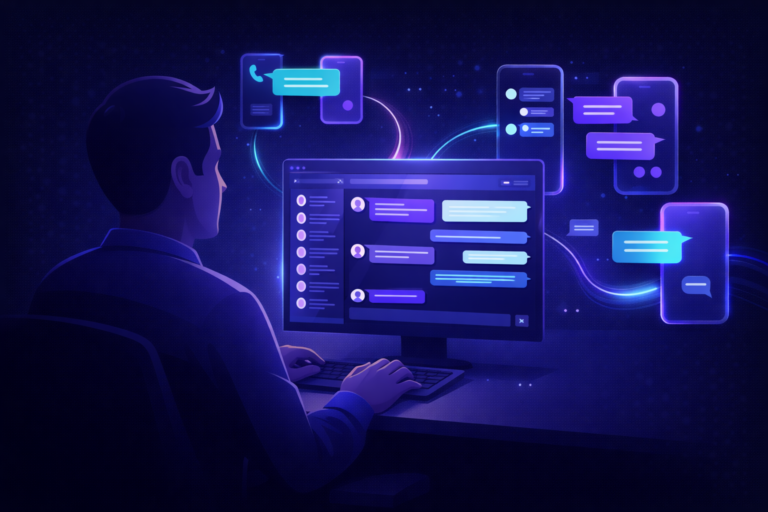
Every professional hire touched at least three tools that could not see each other. A manager filled out a request form. A recruiter re-typed it into ICIMS. Resumes went out by email and a shortlist lived on a network drive. When a manager wanted to hire, a second form went out, an offer letter was written in Word, approvals happened over email, and the signed letter came back through an e-signature tool. ICIMS learned about the hire last. Reporting meant the HR systems lead assembling more than a dozen custom reports into a spreadsheet for leadership.
The hiring managers themselves had no seat in the system at all. That was the part everyone worried about most.
How much will hiring managers self-manage their own steps? The head of HR systems called that question “the roadblock,” because metrics only exist for the steps someone actually performs in the system.
The design question that worried everyone
What Leadership Gets Now
The outcomes that matter to a leadership team are not features. They are control, speed, capacity, and confidence. Here is what each looks like at this client today.
How It Unfolded
The work ran on one weekly touchpoint with the three client stakeholders and moved through four turning points. The full build, with every configuration decision, lived on a shared project board the client could open at any time; our ICIMS consulting practice runs every engagement that way.
Everyone saw the same map
Two recorded discovery sessions walked the real process on the client’s own screen, from a manager’s first request through onboarding and reporting. That became a one-page current-state map showing every handoff. The team had never seen the process laid out end to end, and the map made the argument for them: most of professional hiring happened in lanes ICIMS never touched. Every later design question came back to that page.
Candidates got their own front door
A separate professional portal and application replaced the shared craft form. The team reviewed it together on a live call, line by line, and closed the stage when they were satisfied, not when a checklist was. The details of that application work are in our ICIMS application flow optimization case study.
The workflow was designed around accountability, not defaults
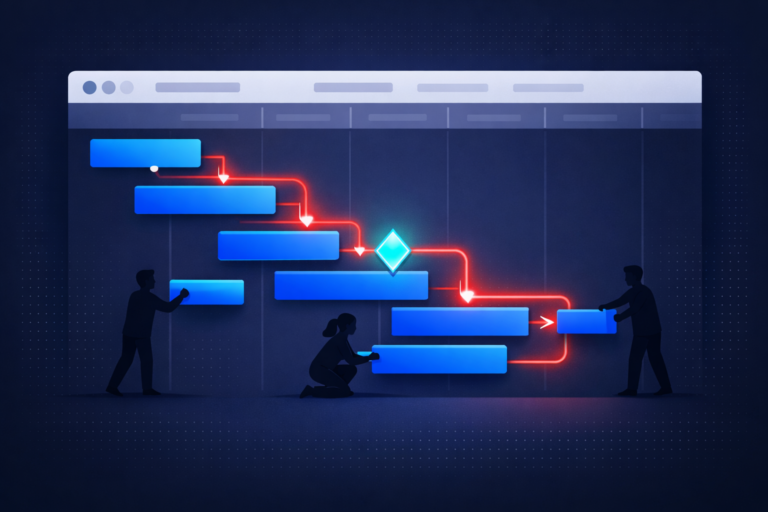
Before touching statuses, the team agreed on two rules from the professional development leader: the recruiter must always be able to step in and do any step, because the recruiter owns the fill, and nothing should be designed around today’s staffing. Only then did we build the workflow, fifteen stages from first review to accepted offer, each with a named owner and a plain-language rule for when to use it. The offer step follows our ICIMS offer management setup guide.
Hiring managers logged in
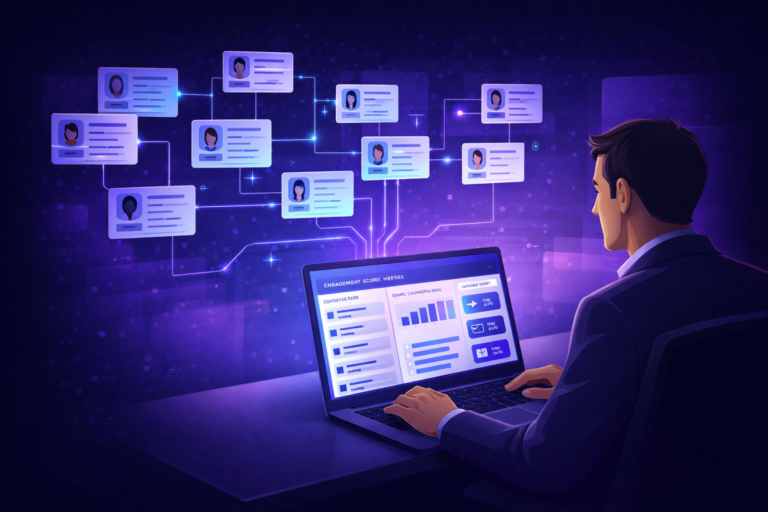
This was the moment the project was really about. A dedicated hiring manager experience, built on the pattern in our ICIMS hiring manager dashboard setup guide and inside a restructured ICIMS login groups hierarchy, went live with single sign-on. Credentials went out to the whole group during the first training. From then on, a manager who wanted a position went to ICIMS, not to a form.
Launch week ran with daily open office hours and a Support Request form inside ICIMS so nobody had to text a consultant to get help. The ICIMS training that came with it was deliberately short: a one-page process guide, a hiring manager quick guide, and recorded walkthroughs.
Want to See What We Can Do for You in 30 Days?
If your leadership team cannot see the professional hiring pipeline without a spreadsheet, book a consult and we will show you what we can change in your own ICIMS instance in the next 30 days.
Book a Free ICIMS ConsultThe FlowFam Approach: Adoption Over Abandonment
Most ATS projects fail after go-live, not before it. The system works; people go back to email. Everything we did here was chosen to prevent that, and it comes down to three principles we apply on every engagement.
The same principles drove the results in our dedicated ICIMS administrator case study, where the outcome was a 90 percent drop in support tickets. Here the outcome was a hiring process leadership can finally see.
What Came Next
The clearest signal that a system is being used is that people ask for more of it. Before this project closed, leadership requested an executive dashboard of weekly requisition flow and open positions by business unit. Leadership was asking which other ICIMS capabilities the company had never turned on. And the same foundation, one portal, one workflow, one set of owners, is now being extended to the company’s high-volume craft hiring.
Ongoing changes to the professional workflow moved to Partner On Demand, our ICIMS managed services model, so the system keeps evolving with the business without another project.
Questions Executives Ask Before They Hire Us
Make ICIMS the System of Record for All of Your Hiring
If your hiring managers are outside the system and your leadership team is reading spreadsheets, the gap is design, not software. Book a consult and we will map your current workflow and show you what changes in the first 30 days.
Book a Free ICIMS Consult